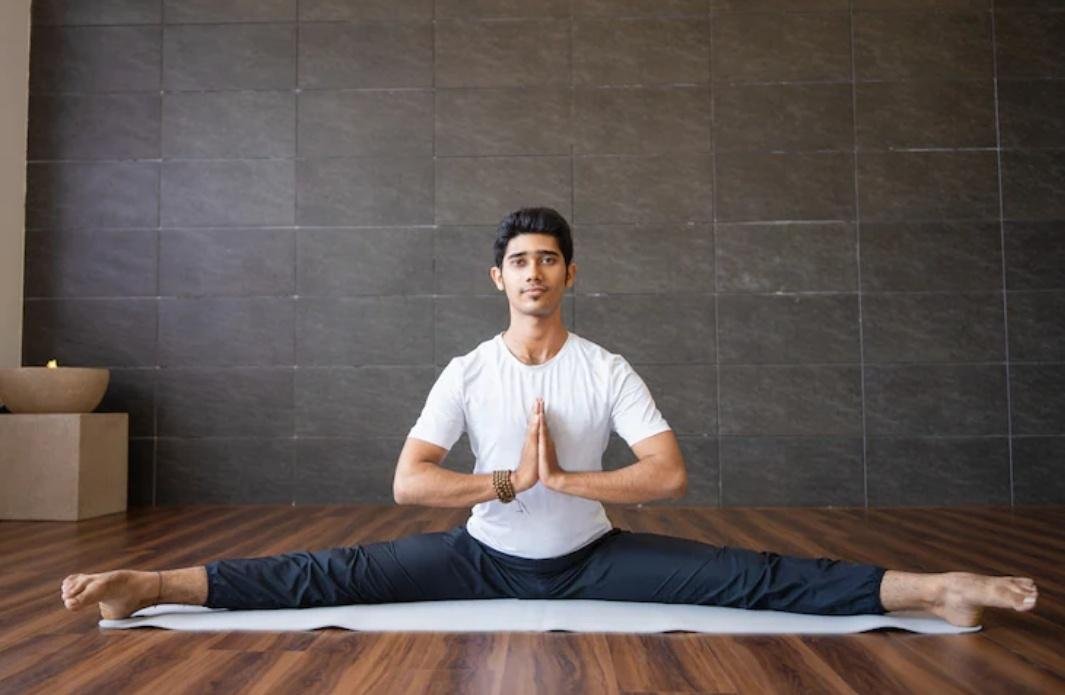
Have you ever held a yoga pose for a very long period of time? What did you notice? Chances are, you experienced a sense of relaxation and intensity. Well, that’s Yin yoga in essence. This branch of yoga keeps you moving quickly, sweating and full of energy. Yin Yoga is different in the way it asks you to move more slowly into the pose and remain like that for an extended period.
Perhaps, this is the number one reason why many people are becoming interested in Yin Yoga Teacher Training programs. And if you ever search for where you can take a teacher training program, one destination comes up time and again – Rishikesh.
Rishikesh is known as the Yoga Capital of the World and every year attracts thousands of students looking to study yoga. However, before you discover Rishikesh and enrol in the teacher training course, it’s good to know a few concepts associated with Yin Yoga, which is superficially simple but profoundly complex in practice.
So, here are four ideas that will allow you to go into the experience with reasonable expectations.
1. Yin Yoga Is Much Slower Than Most People Expect
The biggest shock to newcomers when they first start taking part in a Yin Yoga Teacher Training is how unbelievably slow the practice is!
For example, when you go to class for a typical Yin class, you will likely hold poses anywhere from 3 – 5 minutes, and even longer sometimes. While that may not seem like a long time to you on paper, try holding a still position for that long when you are used to moving, and your mind is racing around… it can feel like an eternity.
Holding poses for long periods of time is an intentional part of the slow-paced approach to Yin yoga. Yin Yoga works primarily with connective tissue (ligament, fascia and joint) and responds better to long and steady pressure than to short and fast pressure from dynamic movement.
Speaking of connective tissue – did you know that connective tissue takes a LOT longer to respond to stress/stimulation than muscle? As a result, poses in Yin are held for long periods; in-effect, your body literally requires longer times because it does not react as quickly as muscle does.
2. Yin Yoga Involves More Than Just Stretching
Many people mistakenly believe that Yin Yoga is more or less an extended stretch; however, if you enrol in Yin Yoga Teacher Training in Rishikesh, you will discover that this is only the surface of what Yin Yoga has to offer.
Most of the theory involved in Yin Yoga is based on anatomical science, with roots in Traditional Chinese Medicine. You will find out that Yin Yoga can help you learn a lot: from fascia, connective tissue, joint health and mobility to the body’s meridian system, energy flow, and balance.
In fact, many teacher trainings spend many hours devoted to understanding the way our bodies interact and adapt to receiving prolonged pressure and remaining motionless.
3. Patience Becomes an Important Skill
In more aggressive types of yoga, it’s typically much clearer to see how much progress you’ve made; you might learn how to do an arm balance or how to hold onto a tough position for an extended period of time.
On the other hand, the signs of progress with Yin can be quite subtle, such as noticing your breath is calmer now compared to when you were doing the exercise; being less anxious about staying in the position longer than before; and having more ability to observe discomfort without responding to it.
One of the biggest lessons that students in a Yin Yoga teacher training program find is that the practice becomes a lot more mental than physical. Because developing the ability to be with sensation and to observe your thoughts without immediately trying to escape them is something that can take a long time. And that’s where the true power of Yin yoga lies.
4. Rishikesh Offers an Enriching Learning Environment
Yin Yoga classes abound in many countries, but taking a class in Rishikesh will give you a completely different experience. Rishikesh is located at the foot of the Himalayas along the Ganges River. The area is full of ashrams, temples, and various levels of yoga schools, and it is common for people to hear chanting or bells from across the river in the evening.
The atmosphere of Rishikesh is ideal for a Yin Yoga practice.
When students come to Rishikesh for a Yin class, they do not have to worry about rushing from one job or commitment to another or through traffic. Students can take their time to completely concentrate on learning, practicing, and enjoying the teachings. The slower pace of Rishikesh is similar to the pace of a Yin Yoga practice.
In this sense, Rishikesh as a location supports the philosophy of Yin Yoga as a practice.
To Wrap Up
If you are interested in the stillness of the Yin Yoga Teacher Training in Rishikesh, it can add significant value. This teacher training can help in building your endurance. You will develop a greater knowledge of anatomy and have a different lens through which to see your personal practice.