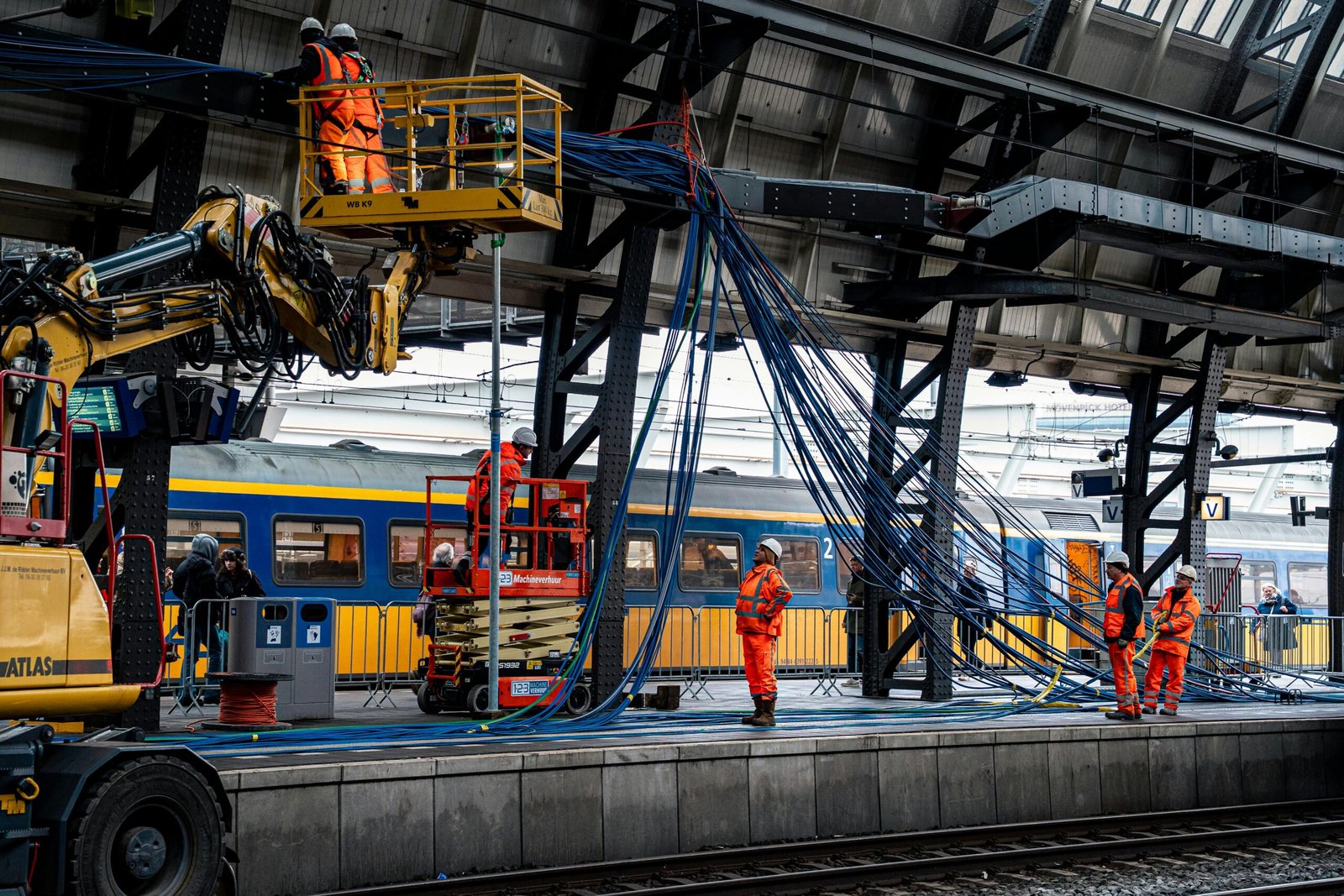
Urban infrastructure demands precision engineering. Cable selection directly impacts project safety, longevity, and operational performance across construction and smart city applications. Prysmian Group has built a global reputation for addressing these technical requirements systematically. Their product portfolio spans power transmission, fiber optics, and specialized building cables. Each solution is engineered to meet stringent compliance thresholds. Understanding how these cables perform under real urban conditions requires a closer examination of what sets Prysmian apart.
What Makes Prysmian Group the Right Cable Partner for Urban Projects
Prysmian Group’s position as a global leader in cable manufacturing stems from decades of engineering innovation, an extensive product portfolio, and a vertically integrated supply chain that gives urban project developers a single, accountable source for critical electrical and fiber optic infrastructure. Its cable expertise spans low-, medium-, and high-voltage systems, telecommunications networks, and industrial power distribution — each domain supported by proprietary manufacturing technologies and rigorous international certifications.
Urban environments present layered technical demands: variable load profiles, space-constrained routing, and regulatory compliance across multiple jurisdictions. Prysmian addresses these requirements through specialized solutions engineered for specific installation conditions, including underground ducting, fire-resistant building wiring, and high-density fiber deployments. This technical breadth, combined with global logistics capacity, positions Prysmian Group as a structurally reliable partner for complex municipal and commercial construction cable programs.
How Prysmian Cables Handle the Demands of Large-Scale Construction
Large-scale construction projects impose mechanical, thermal, and operational stresses on electrical infrastructure that standard-grade cables are not engineered to withstand. Prysmian Group addresses these demands through engineered cable performance characteristics that include high tensile strength, elevated temperature resistance, and robust insulation integrity under sustained load conditions.
Cables deployed across tunneling operations, high-rise frameworks, and civil infrastructure corridors must maintain dielectric stability despite vibration, compression, and environmental exposure. Prysmian’s product configurations account for installation considerations specific to large-scale environments, including conduit routing complexity, vertical cable runs, and exposure to construction-phase contaminants.
Armored and fire-resistant variants further extend operational reliability in phased construction zones where electrical continuity is critical. This engineering discipline guarantees cable systems perform consistently from initial installation through full project commissioning.
Prysmian Cable Solutions Designed for High-Rise Buildings
High-rise construction imposes electrical distribution challenges that scale with building height, floor count, and occupant load density. Prysmian Group addresses these demands through cable systems engineered for vertical power transmission, load management, and fault containment across multiple occupied floors simultaneously.
Fire safety compliance drives critical specification decisions in high-rise environments. Prysmian’s low-smoke halogen-free cables limit toxic gas emission during combustion events, supporting evacuation protocols and reducing structural damage propagation. These cables meet IEC 60332 and EN 50200 flame resistance classifications required by international building codes.
Elevator cable design represents another specialized application. Prysmian produces flexible, mechanically resilient traveling cables capable of withstanding continuous cyclic motion, tension variation, and electrical load demands inherent to vertical transportation systems operating across extended building heights.
How Prysmian Group Wires Smart City Infrastructure
Smart city infrastructure extends the electrical and data connectivity demands of individual high-rise structures to entire urban networks, requiring cable systems that support distributed sensing, communication, and power delivery across geographically dispersed assets.
Prysmian Group addresses these requirements through solutions engineered for fiber optic integration within underground conduit networks, enabling low-latency data transmission between traffic systems, municipal sensors, and control centers.
For smart grid implementation, Prysmian supplies medium-voltage cables that accommodate bidirectional energy flow, supporting distributed generation sources such as solar installations and storage systems. Their cable designs incorporate shielding and insulation materials rated for variable burial depths, thermal conditions, and moisture exposure common in urban environments.
This technical breadth positions Prysmian as a capable supplier across the full scope of smart city deployment requirements.
Safety and Compliance Standards Prysmian Cables Are Built To Meet
Compliance with internationally recognized safety standards forms the technical foundation upon which Prysmian Group’s cable products are engineered and validated. The company’s manufacturing processes adhere to IEC, UL, and EN standards, guaranteeing cables meet fire resistance, voltage tolerance, and electromagnetic compatibility requirements across diverse infrastructure applications.
Rigorous testing procedures assess mechanical durability, thermal performance, and chemical resistance under simulated operational stresses before products reach the market. Stringent quality control protocols are embedded throughout production, from raw material verification to final product certification.
Prysmian maintains accredited testing laboratories that conduct independent verification aligned with regional regulatory frameworks, including those governing low-smoke, halogen-free cable specifications critical to public infrastructure. These compliance measures reduce installation risk, extend operational lifespan, and certify regulatory approval across multiple jurisdictions simultaneously.
How Prysmian Cables Support Urban Sustainability Targets
Meeting regulatory benchmarks establishes a performance baseline, but the role of cable infrastructure in advancing urban sustainability targets extends well beyond minimum compliance thresholds. Prysmian Group cables contribute measurably to sustainable development through reduced transmission losses, halogen-free materials, and extended operational lifespans that minimize replacement cycles and associated waste streams.
Low-smoke, zero-halogen formulations directly reduce environmental impact during end-of-life disposal and fire events. Additionally, Prysmian’s high-efficiency energy cables support renewable integration across urban grids, enabling municipalities to meet carbon reduction commitments with reliable infrastructure.
Recyclable conductor materials and responsibly sourced compounds align with circular economy frameworks increasingly embedded within urban planning mandates. These attributes collectively position Prysmian cable systems as functional tools for cities pursuing measurable, verifiable sustainability outcomes rather than symbolic gestures toward environmental responsibility.
Choosing the Right Prysmian Cable for Your Urban Project
Selecting the appropriate Prysmian cable for an urban project requires systematic evaluation of several interdependent variables, including load capacity, installation environment, regulatory classification, and projected operational lifespan. Cable selection criteria must account for voltage rating, conductor material, insulation type, and compliance with applicable national or international standards.
Installation considerations further refine this decision matrix, encompassing burial depth, conduit compatibility, thermal dissipation requirements, and exposure to mechanical stress or chemical agents. Prysmian’s segmented product portfolio addresses distinct urban applications, from underground distribution networks to high-rise building infrastructure.
Engineers and procurement specialists are advised to consult Prysmian’s technical documentation and coordinate with certified distributors to validate product suitability against site-specific parameters, ensuring performance alignment with both immediate project demands and long-term urban operational requirements.