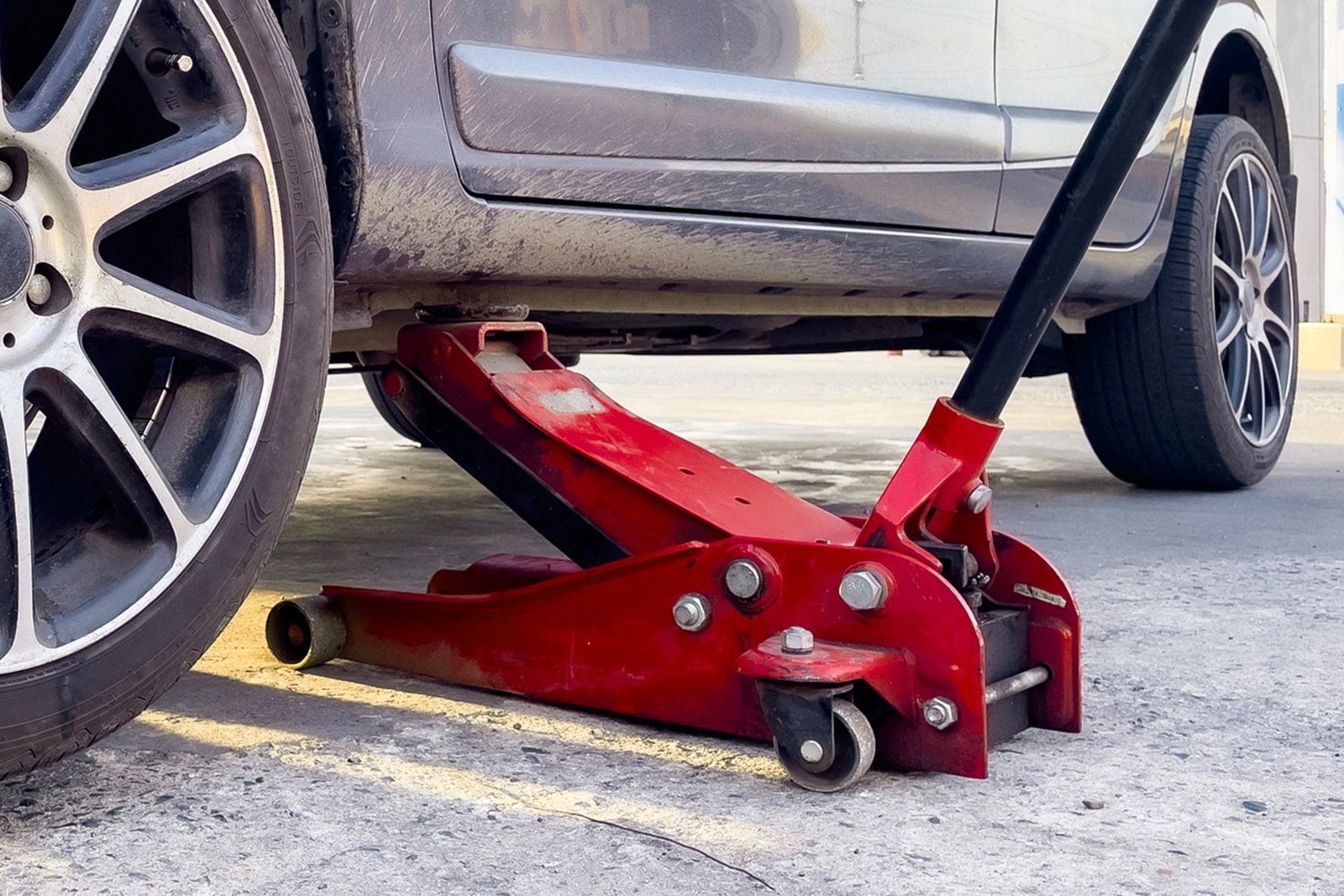
You’re on the side of the road, heart thumping a little too loud, hazard lights blinking like a metronome for your anxiety. Your SUV suddenly feels less like freedom and more like a stubborn boulder with a flat tire. Then you open the trunk and see it: that compact jack your vehicle came with. Small. Lightweight. Almost… optimistic.
So the question hits you hard: can you really lift an SUV with a compact jack—or are you about to learn an expensive, dangerous lesson?
Let’s walk through it together, step by step, like an informational guide should—only with the kind of real-world honesty you’d want if this were happening to *you* right now.
Understanding What “Compact” Actually Means (And Why You Should Care)
When you hear “compact jack,” you might picture something flimsy. But compact doesn’t automatically mean weak. It usually means *space-saving*, designed to fit neatly in your spare tire compartment and work *just enough* to get you out of trouble.
Most SUVs come with a scissor jack (compact, crank-operated). Some aftermarket compact options are bottle jacks (small footprint, tall lift range) or low-profile minis that *look* tough but have very specific limitations.
Here’s the truth you need to keep close: lifting an SUV isn’t about “can it rise a few inches?” It’s about whether the jack is rated for:
– Your SUV’s weight
– The lifting point strength
– The ground conditions
– The lift height needed to fully clear the tire
That’s why people who do this often—road-trippers, off-roaders, anyone who hates feeling unprepared—tend to upgrade to car jacks that feel less like a temporary crutch and more like a dependable tool.
SUV Reality Check: Car jacks and Weight Ratings You Can’t Ignore
If you take only one thing from this guide, let it be this: the rating isn’t a suggestion.
Your SUV might weigh 4,500–6,500 pounds. That doesn’t mean you need a 6,500-pound jack, because you’re only lifting one corner at a time—but you *do* need a safe margin.
Look for:
– Minimum 2-ton rating for smaller SUVs/crossovers
– 3-ton rating for larger SUVs and many trucks
– More if you’re loaded (cargo, passengers, gear—because you *will* forget about that cooler until it’s too late)
And yes, you can often lift an SUV with the factory compact jack… but it can feel like balancing a dinner plate on a pencil. That’s why experienced drivers keep better car jacks in the garage or cargo area—especially if you ever change tires on uneven ground.
Why Compact Jacks Fail in Real Life (Even When They’re “Rated”)
On paper, a compact jack may be capable. In reality, your environment doesn’t care about paper.
Here’s what makes compact jacks struggle:
– Soft shoulders (sand, gravel, wet dirt)
– Uneven asphalt
– Sloped surfaces
– Rusty or bent jacks
– Poor lifting point contact
– Not enough lift height for big SUV tires
An SUV tire is tall. The suspension droops when lifted. Sometimes you crank and crank and crank… and the tire is still kissing the ground like it refuses to let go.
That’s where a trolley car jack wins: more stability, smoother lift, and a wider base. But even that only works if you can *fit it under the vehicle* and you’re on reasonably solid ground.
A Quick Safety Ritual You Should Treat Like a Promise to Yourself
If you’re about to lift an SUV—especially with a compact jack—treat safety like something personal. Because it is. You’re not just changing a tire. You’re protecting your hands, your legs, your life.
Before lifting:
1. Park on the flattest surface possible
2. Engage parking brake
3. Put the car in Park (or in gear for manuals)
4. Use wheel chocks (or rocks/wood if you must)
5. Locate the correct jack point (owner’s manual matters here)
6. Never put any part of you under the SUV with only a jack holding it
If you’re doing this at home, jack stands aren’t optional—they’re the calm, steady friend you want in a crisis.
And speaking of calm friends…
Anecdote #1: The Strange Little Lesson of “adust”
A long time ago, someone once tried to write “adjust” in a rushed message and sent “adust” instead. It looked ridiculous. It sounded wrong. But the moment stuck—because it was strangely perfect.
That’s what happens with jacking up an SUV, too. You think you’re ready. Then you realize you need to adust—not just adjust—your plan in the moment. Maybe the ground is softer than you expected. Maybe the jack point isn’t lining up. Maybe your jack handle feels like it’s made of cheap hope.
That tiny typo becomes a reminder: when the conditions aren’t perfect, you don’t force it. You *adust*. You re-check. You reposition. You respect the situation.
When a Trolley car jack Makes the Job Feel Less Scary
If you’ve ever watched a compact scissor jack wobble while you crank, you know the feeling: your stomach tightens, and you start negotiating with the universe.
A trolley car jack changes the emotional tone of the whole job. You roll it in. You pump. The lift feels steady, like the tool is saying, “You’ve got this.”
A quality trolley jack helps because:
– The wide base resists tipping
– The hydraulic lift is smoother and faster
– You often get more usable lift height
– It handles heavier vehicles with better stability
But there’s a catch: a trolley jack is heavier and bulkier. It’s perfect for home garages and planned maintenance. For roadside emergencies, some people carry a compact bottle jack instead—small enough to store, strong enough to lift, but still requiring a solid base.
If you want a reliable emergency setup, pairing good car jacks with a small wood plank (for soft ground) can be the difference between “no problem” and “why is this happening to me?”
Anecdote #2: A Relationship Lesson You Didn’t Expect from a Flat Tire
Think about a relationship where one person does all the heavy lifting—emotionally, mentally, financially—until something finally buckles. It doesn’t usually break in a dramatic explosion. It wobbles first. It creaks. It gives warning signs.
That’s exactly how lifting tools behave. When you push a compact jack to its limits repeatedly, it starts showing you its stress—slow lifting, awkward angles, instability.