In 2020, the U.S. Food and Drug Administration issued two official warning letters to KVK-Tech, Inc. for serious violations of current Good Manufacturing Practice, also called cGMP.
The first letter, dated February 11, 2020, followed an inspection of the company’s 110 Terry Drive facility in April 2019. The second letter, dated October 8, 2020, followed an inspection of the 100 Campus Drive facility in early 2020.
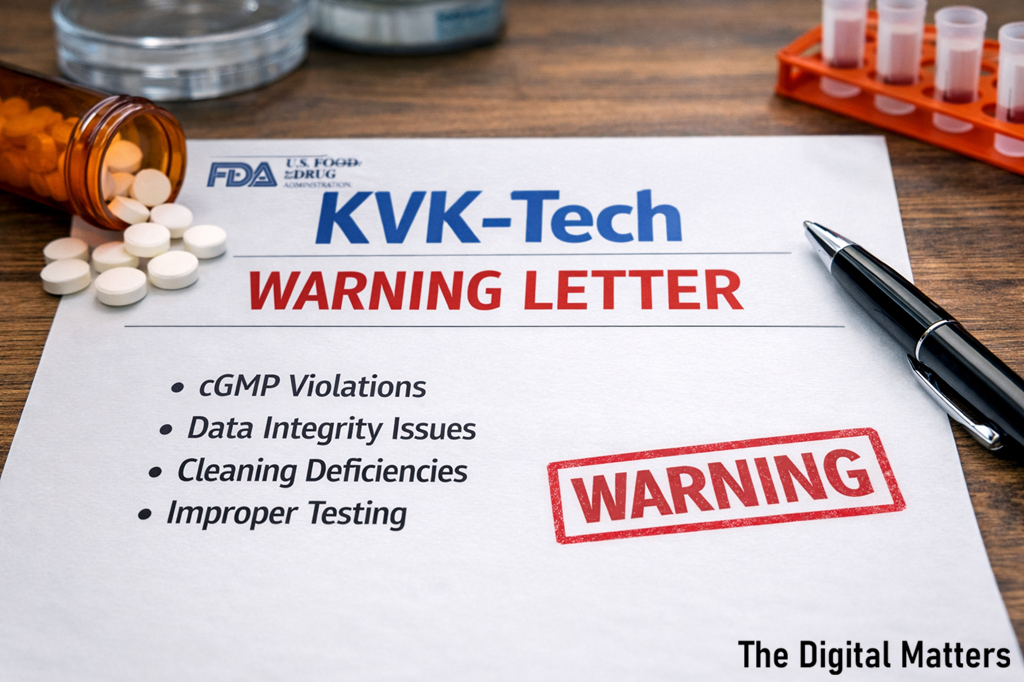
The FDA cited problems with:
- Failure to properly investigate batch discrepancies
- Weak data integrity controls
- Inadequate cleaning validation
- Poor documentation and incomplete investigations
- Improper laboratory testing
Because of these findings, KVK-Tech faced regulatory pressure, agreed to suspend manufacturing at one facility, and later became involved in legal proceedings. In 2023, the company also issued a voluntary recall of one drug lot.
These warning letters remain important because they show how the FDA enforces quality standards to protect public health.
Who Is KVK-Tech and What Does It Do?
KVK-Tech is a U.S. pharmaceutical manufacturer that produces generic prescription drugs. The company supplies medications to pharmacies and healthcare providers across the country.
Like all drug manufacturers in the United States, KVK-Tech must follow cGMP rules. These rules ensure that medicines are made under strict quality controls. Therefore, when the FDA finds serious violations, it takes formal action.
What Is an FDA Warning Letter?
An FDA warning letter is a public document. It informs a company that inspectors found significant regulatory violations.
The letter requires the company to:
- Explain the problems
- Submit a corrective action plan
- Show proof of improvement
Although a warning letter is not a criminal charge, it signals serious compliance concerns. If a company fails to correct the issues, the FDA may take stronger action.
The February 11, 2020 Warning Letter
The first KVK-Tech warning letter followed an inspection of the 110 Terry Drive facility.
Failure to Investigate Batch Problems
The FDA found that the company did not fully investigate discrepancies in certain drug batches. For example, issues involving drugs such as phentermine HCl were not thoroughly examined.
When manufacturers fail to investigate production problems, they may miss root causes. As a result, similar issues can happen again.
Data Integrity Weaknesses
Inspectors discovered that laboratory data systems allowed files to be modified or overwritten without proper audit trails. In addition, some analysts admitted recording incorrect information in official logbooks.
Data integrity means that records must be accurate, complete, and secure. If data can be changed without detection, regulators cannot fully trust the testing process.
The October 8, 2020 Warning Letter
Later in 2020, the FDA inspected the 100 Campus Drive facility. After reviewing the findings, the agency issued a second warning letter.
Importantly, this letter noted repeated violations across multiple sites. Therefore, the FDA questioned management oversight.
Inadequate Cleaning Validation
The FDA found that non-dedicated equipment, including slat counters, was not properly validated for cleaning.
When equipment handles different drug products, manufacturers must prove that cleaning removes all residue. Otherwise, cross-contamination may occur.
Poor Documentation and Investigations
Inspectors identified incomplete batch records and weak investigation processes.
For example, foreign particles were found in methylphenidate oral solution. However, the company did not fully document or investigate the issue.
Proper documentation protects patients because it helps manufacturers identify and fix problems quickly.
Improper Testing Methods
The FDA also found problems in impurity testing. Laboratory staff failed to properly integrate co-eluting peaks during analysis.
Because of this error, out-of-specification results were not correctly identified. Some affected batches remained on the market.
Testing accuracy is critical because it confirms whether a drug meets safety standards.
Why Data Integrity Became a Central Concern
Data integrity failures often indicate deeper quality system problems.
If employees can change laboratory records or record incorrect information, then oversight controls may be weak.
For this reason, the FDA strongly recommended that KVK-Tech hire a qualified third-party consultant. The consultant would review data systems and oversee remediation.
Independent audits help rebuild trust with regulators.
Manufacturing Suspension and Oversight
Following the October 2020 warning letter, KVK-Tech committed to suspending drug manufacturing at the cited facility.
This step showed acknowledgment of the seriousness of the findings. At the same time, the FDA continued monitoring corrective actions.
The goal of enforcement is not punishment alone. Instead, it focuses on ensuring future compliance and protecting patients.
Legal Consequences in 2024
In 2024, the U.S. Department of Justice reached a plea agreement with KVK-Tech related to civil False Claims Act violations.
While the legal process extended beyond the warning letters themselves, the earlier compliance issues contributed to broader scrutiny.
Regulatory violations can sometimes lead to financial penalties and legal settlements.
2023 Voluntary Recall
In September 2023, KVK-Tech issued a voluntary nationwide recall of one lot of Betaxolol Tablets due to potential contamination risks.
A recall does not automatically mean patients were harmed. However, it shows that quality concerns required corrective action.
Recalls serve as another layer of public health protection.
What This Case Means for Patients
For patients, the key takeaway is simple.
The FDA monitors drug manufacturers closely. When inspectors find serious violations, they act.
Although warning letters may sound alarming, they are part of the regulatory system designed to protect consumers.
Most importantly, enforcement actions encourage companies to improve quality systems and prevent future risks.
Broader Lessons for the Pharmaceutical Industry
The KVK-Tech warning letter highlights several important lessons:
- Cleaning validation must be proven and documented
- Laboratory data must remain secure and accurate
- Batch discrepancies must be fully investigated
- Management oversight must be strong and consistent
Because drug safety depends on reliable systems, even small failures can raise larger concerns.
Final Thoughts
The KVK-Tech warning letter events in 2020 show how seriously the FDA enforces cGMP standards. The violations involved cleaning validation gaps, data integrity weaknesses, incomplete investigations, and testing errors.
However, the regulatory process also provides a path for correction. Through oversight, independent audits, and compliance improvements, companies can strengthen their systems.
In the end, these actions protect something far more important than corporate reputation. They protect public health.
That is why FDA warning letters remain a vital part of the U.S. drug safety system.
Disclaimer: This article is for informational purposes only. It is based on publicly available FDA documents and official reports. It does not provide legal, medical, or regulatory advice. For the most current information, please refer directly to official FDA sources or consult a qualified professional.
Stay informed with reliable regulatory news and analysis at The Digital Matters.