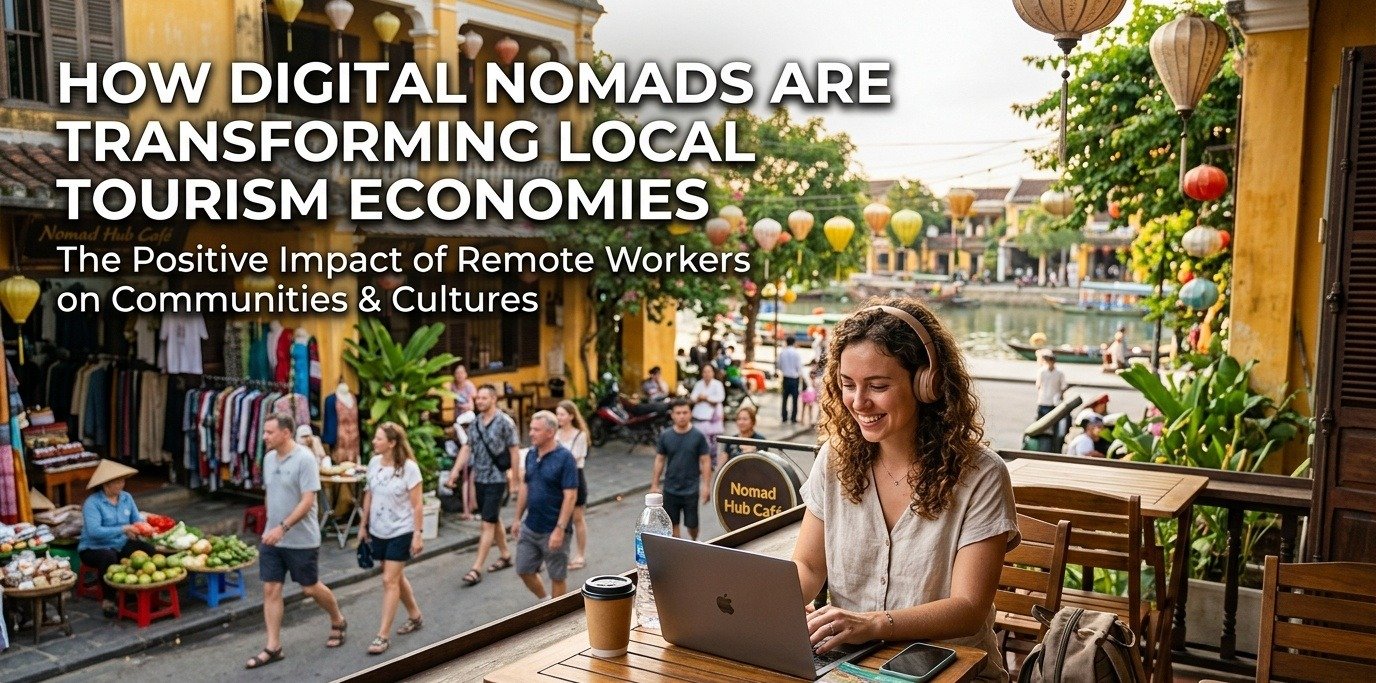
Digital nomads are changing local tourism. They travel while working online and often stay for weeks or months instead of just a few days. Because of that, they spend more consistently in local communities, supporting cafés, coworking spaces, small shops, and everyday services. They also bring new ideas, skills, and global connections. In response, many cities and towns are adapting with better internet, flexible housing, and work-friendly spaces.
In this blog, we’ll explore how digital nomads are shaping local economies and what that means for travel today.
The Rise of Remote Work Tourism and the Coworkation Economy
Remote work tourism is more than a passing trend. It reflects a shift in how cities attract, support, and benefit from visitors. The coworkation economy, combining coworking, vacation living, and longer stays, grew rapidly after 2020 as remote work made location less important.
How Digital Nomads Actually Spend vs. Classic Tourists
Traditional tourists often spend on hotels, tours, and souvenirs. Digital nomads spend more on furnished rentals, coworking spaces, gyms, cafés, and local services. Their spending reaches local businesses more directly. Many also arrive outside peak travel seasons, helping businesses maintain steadier income year-round.
Digital Nomad Destinations and the “Slomad” Phenomenon
Places like Chiang Mai, Lisbon, Playa del Carmen, and Da Nang became popular with digital nomads because of strong internet, affordable living, walkability, and established remote-work communities. Some nomads, often called “slomads,” stay three to six months in one place, choosing a deeper local experience over constant movement.
Policy Frameworks That Make Nomad Growth Work for Everyone
Policy plays a major role in whether nomadic growth benefits a destination or creates pressure on local communities. Strong policies can guide spending toward local economies while helping protect housing supply and public services.
Digital Nomad Visas With Genuine Community Safeguards
A well-designed digital nomad visa should set clear stay requirements, require local health insurance, and explain tax responsibilities. Some destinations also direct part of nomad-related spending toward community development.
For those heading to Turkey specifically, securing the best esim for turkey before departure is a straightforward, practical move. It eliminates roaming charges and ensures you stay connected for both work and daily logistics from the moment you land in Istanbul, Cappadocia, or Antalya. Sorting connectivity alongside visa paperwork before you arrive prevents genuinely disruptive surprises at the worst possible moment.
Tax Tools and Transparent Tourism Levies
Long-stay tourism taxes, paired with public dashboards showing residents precisely how collected revenue gets reinvested, can convert potential community resentment into genuine buy-in. Property incentive schemes that reward owners offering fair long-term leases over short-term rentals further stabilize housing supply, addressing the displacement problem before it compounds.
Ground-Level Economic Impacts When Nomads Arrive in Numbers
When enough nomads settle in a neighborhood, the local economy doesn’t simply expand; it diversifies in ways that purely tourist-focused spending never achieves.
Economic Gains That Reach Beyond Standard Tourism Revenue
Tourism in Massachusetts generated $24.2 billion in direct spending in 2024, supporting over 155,808 jobs. Nomad-driven economies replicate that pattern, but at the street level. Yoga studios, pharmacies, laundry services, and neighborhood meal-prep kitchens, businesses that conventional tourism completely bypasses, suddenly find themselves with a dependable weekly customer. That consistency matters enormously.
Job Creation, Skill Transfer, and Local Entrepreneurship
Here’s what the economic data rarely captures: nomads transfer knowledge, not just money. Community managers, English-speaking hospitality staff, and local freelancers often develop meaningful skills through informal mentoring exchanges with long-stay visitors. Coworking spaces become unexpected incubators, rooms where local entrepreneurs encounter foreign collaborators and discover cross-border business opportunities they’d have never found otherwise.
Infrastructure Upgrades That Outlast the Nomads Themselves
Demand for reliable, fast connectivity pressures municipalities and private operators to invest in fiber broadband, improved cycling infrastructure, and genuinely usable public spaces. Those upgrades don’t disappear when nomads move on. Walkable, well-connected neighborhoods, partly built to attract remote workers, make cities meaningfully better places to live for everyone already there.
The Hidden Costs Popular Destinations Are Now Confronting
Growth without careful planning creates friction. Some of the world’s most celebrated digital nomad destinations are grappling with consequences their tourism boards never modeled when launching visa campaigns optimistically.
Housing Pressure, Gentrification, and Displacement
Mid-term rental platforms steadily pull furnished apartments out of long-term housing inventory. The HousingAnywhere International Rent Index recorded a 3.1% yearly rental price increase in Q4 2024, pressure that lands hardest on local residents, not visiting nomads.
When families begin relocating to outer districts because central neighborhoods have priced them out, the social fabric that made those neighborhoods attractive starts unraveling.
Price Inflation and Neighborhood Commercial Drift
Café menus adjust upward to reflect nomadic purchasing power. Supermarket shelves fill with imported goods that few locals actually want. Over time, entire commercial corridors can quietly pivot to serve foreign visitors, quietly stripping longtime residents of affordable everyday options. Nobody plans this maliciously. Market logic simply follows available spending power, which is exactly why policy intervention matters.
Cultural Friction and Parallel Communities
When pricing gaps become visible in daily life, resentment follows naturally. English-only coworking bubbles, inadvertently oblivious social media behavior, and minimal effort to engage local culture produce two communities occupying the same streets without ever genuinely intersecting. That segregation corrodes the goodwill that makes long-stay tourism sustainable for anyone.
How Local Businesses Can Genuinely Thrive in the Coworkation Economy
For cafés, guesthouses, and tour operators operating inside the coworkation economy, long-stay visitors represent a fundamentally different revenue opportunity, loyalty-driven rather than volume-driven.
Designing Offers That Speak Directly to Long‑Stay Nomads
Monthly pricing structures, ergonomic seating, dedicated quiet zones, and honestly documented Wi-Fi speeds aren’t nice-to-haves; they’re baseline requirements for remote workers seriously evaluating where to settle for several months. Bundling coworking access with accommodation and curated neighborhood experiences creates compelling packages that competitors relying purely on nightly rates simply cannot replicate.
Community-Centric Experiences That Locals Actually Want Too
Skill-share evenings, language exchanges, and cultural dinners that bring nomads and residents into genuine conversation serve dual purposes; they’re solid business and genuine community building simultaneously. Maintaining part of a menu at locally accessible price points isn’t charity. It signals clearly that a business belongs to its neighborhood, not exclusively to a visiting class passing through.
Final Thought: What Every Stakeholder Genuinely Needs to Remember
Digital nomads are neither economic saviors nor inevitable villains; they’re a responsive force that takes the shape of whatever a destination thoughtfully welcomes. With deliberate policy, meaningful community participation, and genuinely intentional business decisions, remote work tourism can deliver year-round income, real skill transfer, and lasting infrastructure improvements without displacing the residents who give a destination its actual identity. Travel slower. Spend locally. Choose the digital nomad destinations that have genuinely prepared for, and legitimately need, what you bring.
Frequently Asked Questions
How do digital nomads differ economically from traditional tourists?
Nomads direct spending toward monthly rentals, coworking spaces, gyms, and recurring local services rather than hotels and attractions. That spending pattern penetrates neighborhood economies more deeply and sustains local businesses across low seasons, producing more stable and diversified revenue streams.
Which policies most effectively protect housing while welcoming nomads?
Density caps on short-term rentals in residential zones, financial incentives favoring long-term leases, and transparent reinvestment of tourism levies into housing and public transit represent the most effective combination that destinations have meaningfully tested.
Can small local businesses attract nomads without alienating existing customers?
Absolutely, by maintaining locally accessible price tiers, hosting genuinely mixed community events, and designing work-friendly spaces without abandoning their core identity. The strategic goal is thoughtful addition, not wholesale replacement, of an established customer base.