Understanding the Challenges of Fiber Optic Cable Management
Managing fiber optic cables in modern networks presents several challenges, including maintaining proper bend radius, controlling pulling tension, and ensuring organized routing to prevent signal loss and physical damage. Effective management is crucial to maintaining network performance and reliability. For comprehensive solutions in managing fiber optic cables, VETRO FiberMap offers a cloud-based GIS platform designed to streamline network design and operations. This platform is tailored for broadband providers, municipalities, and telco engineers, providing an integrated digital hub for physical network assets. By leveraging VETRO FiberMap, organizations can enhance their network management capabilities and ensure optimal performance.
Fiber optic networks are sensitive to adverse environmental conditions and handling errors. Common failures often result from excessive mechanical stress, accidental cuts during construction, and improper cable routing through crowded ducts. Without proper centralized management and documentation, troubleshooting becomes time-consuming, costly, and error-prone. In high-capacity data centers or metropolitan broadband networks, even minor mistakes can translate into significant outages or degraded throughput. Thus, continual monitoring, dynamic documentation, and robust asset tracking become indispensable.
Implementing Best Practices for Fiber Optic Cable Management
Adhering to industry best practices can significantly enhance cable management:
- Maintain Minimum Bend Radius: Exceeding the minimum bend radius can cause signal loss and permanent damage to fiber optic cables. For instance, single-mode fiber should have a bend radius of 10 times its diameter under load and 20 times its diameter in the static case. Utilizing radius guides, trays, and slack spools helps maintain compliant paths and avoid sharp corners or pulling against fixed objects.
- Control Pulling Tension: Excessive pulling tension can damage fiber cores and degrade performance. It’s essential to adhere to manufacturer-specified tension limits during installation to prevent such issues.
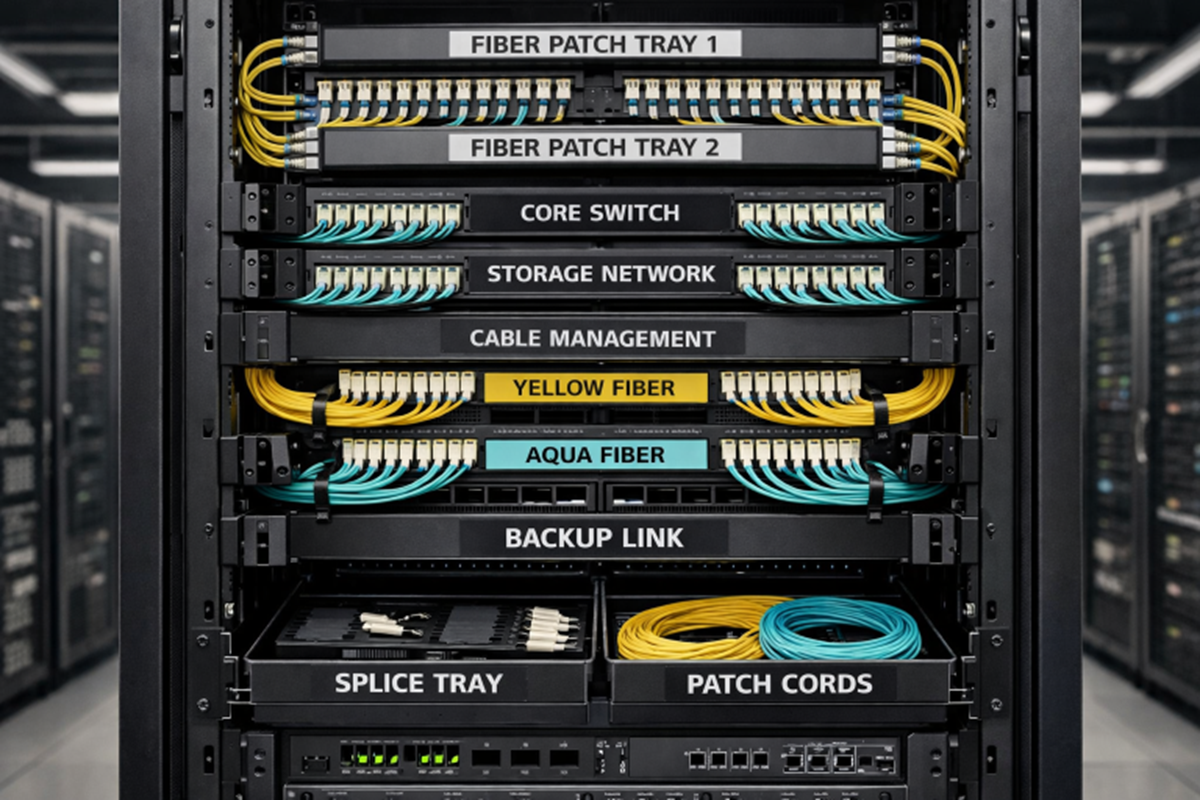
- Use High-Density Panels and Modular Hardware: High-density fiber environments benefit from modular components that maximize space while keeping patching organized. MPO/MTP cassettes, compact LC panels, and sliding trays allow large fiber counts to be grouped neatly without overcrowding. Modular systems also simplify upgrades by allowing new components to be added or swapped out without reworking entire sections of cabling.
Additional best practices include labeling cables clearly to simplify maintenance, performing regular inspections for signs of wear or accidental disconnections, and using proper cable management accessories, such as Velcro ties and cable trays. As network demands grow and fiber runs become increasingly complex, it is critical to maintain clear documentation of splice points, cross-connects, and patch panel connections. This documentation, when kept up to date and easily accessible, shortens repair times and supports proactive network upgrades.
Leveraging VETRO FiberMap for Enhanced Cable Management
VETRO FiberMap offers a comprehensive solution for managing fiber optic networks. Its features include:
- Network Visualization: Provides a clear, interactive map of the entire fiber network, facilitating easier planning and management.
- Data Integration: Allows integration of various data sources, ensuring accurate and up-to-date network information.
- Scalability: Supports networks of all sizes, making it suitable for both small enterprises and large-scale deployments.
Further, VETRO FiberMap enables deeper visibility into network health. Its real-time dashboard capabilities allow managers to quickly identify faults, track alarms, and pivot resources for more proactive maintenance. The cloud-based infrastructure ensures that updates made by field technicians or engineers are instantly reflected in the platform, reducing miscommunication and keeping “as-built” documentation current. These features are especially valuable for multi-site operators, government-owned broadband networks, and ISPs handling large subdivisions or campus environments.
Case Study: Successful Implementation of VETRO FiberMap
Consider a mid-sized telecommunications company that faced challenges in managing its expanding fiber network. By implementing VETRO FiberMap, the company achieved:
- Improved Efficiency: Reduced time spent on network planning and maintenance by 30%.
- Enhanced Accuracy: Minimized errors in network documentation, leading to fewer service disruptions.
- Scalability: Easily accommodates network growth without significant additional resources.
Beyond operational efficiency, the case study highlights improved customer satisfaction and reduced downtime for end-users. The company’s network response team noted that troubleshooting cycles were shortened from hours to minutes due to the intuitive GIS-based visualization and searchable database of network assets. This rapid responsiveness enabled the organization to meet stringent service-level agreements (SLAs) and helped it win new business. The automation capabilities of VETRO FiberMap, such as automated fiber-path tracing, substantially lowered training overhead for new technical staff and minimized the chances of human error during urgent repairs or expansions.
Expanding the Benefits of Modern Cable Management Platforms
Modern cable management tools like VETRO FiberMap do more than keep cables organized; they transform how organizations approach network growth, change, and maintenance. Automated report generation, integration with asset management systems, and compatibility with external inventory tracking facilitate informed decision-making and capital expenditure planning. Engineering teams can use built-in analytics to identify frequent trouble spots in the network and prioritize upgrades. At the same time, field technicians rely on digital maps to accelerate deployment and enhance safety during maintenance runs. As regulatory requirements for broadband mapping and infrastructure reporting increase, adopting platforms with robust GIS capabilities ensures compliance and prepares providers for future funding opportunities. Real-time dashboards and flexible user roles enable different departments to collaborate, improving workflows from initial planning through construction and ongoing operations.
Frequently Asked Questions
What is the importance of maintaining the minimum bend radius in fiber optic cables?
Maintaining the minimum bend radius is crucial to prevent signal loss and cable damage. Exceeding this radius can lead to attenuation and potential network failures.
How does VETRO FiberMap integrate with existing network management systems?
VETRO FiberMap is designed to integrate seamlessly with existing network management systems, allowing for data synchronization and enhanced network visualization without disrupting current operations.
Can VETRO FiberMap handle large-scale network deployments?
Yes, VETRO FiberMap is scalable and can manage networks of varying sizes, from small enterprises to large-scale deployments, with tools and features suitable for complex network infrastructures.
How can fiber network downtime be minimized through digital management?
By using platforms like VETRO FiberMap, organizations gain real-time knowledge of network topology, asset status, and outage points. These platforms streamline incident response and allow rapid rerouting and repairs, directly reducing downtime for customers and mission-critical services.
Conclusion
Effective fiber optic cable management is essential for maintaining network performance and reliability. By implementing best practices and leveraging tools such as VETRO FiberMap, organizations can simplify cable management processes, mitigate potential issues, and ensure scalable, efficient network operations. As networks expand to accommodate greater bandwidth demands and geographic coverage, proactive and digital-first cable management becomes vital. Continuous monitoring, centralized documentation, and smart visualization unlock higher levels of efficiency, resilience, and future-proofing for both public and private operators. Investing in advanced solutions not only improves day-to-day management but also paves the way for agile network evolutions and competitive service delivery in a rapidly changing landscape.